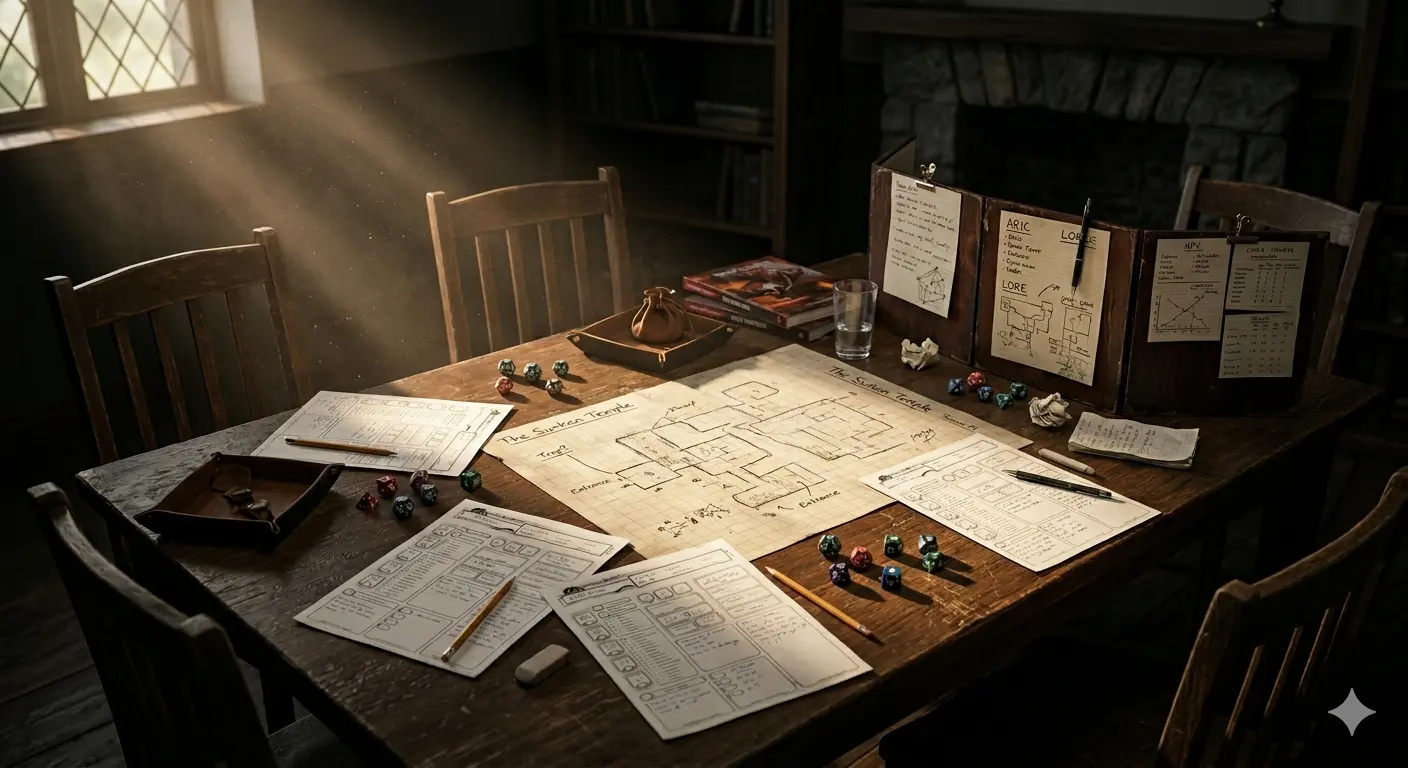
Why Your D&D Campaign Died at Session 12 (And How to Keep This One Alive)
Most campaigns that die in the middle share the same handful of failure modes — and most of them are more preventable than they feel like in the moment.
There's a number that comes up constantly when DMs talk about campaigns that didn't finish. It's not always exactly twelve — sometimes it's eight, sometimes it's fifteen — but it's always somewhere in that range. The campaign that started strong, had a great first arc, built some momentum, and then quietly stopped happening.
Not dramatically. Nobody quit. Nobody had a falling out. The campaign just... ran out of gas somewhere in the middle and never got it back.
I've been there. Most DMs have been there. And the thing that makes it genuinely frustrating is that the campaign wasn't bad. The players were into it. The world was interesting. There just wasn't another session after the last one.
If you've experienced this, you probably have a theory about why it happened. Scheduling. Life got busy. The DM lost the thread. Player engagement dropped off. All of those are true to some extent. But in my experience, most campaigns that die in the middle share a few specific failure modes — and most of them are more preventable than they feel like in the moment.
The Actual Reasons Campaigns Die
Scheduling Entropy
This one is obvious but it deserves to be said clearly: the number one campaign killer is not finding the next session date.
It works like this. You play a session. It ends at a natural stopping point. Everyone's tired and happy. Someone says "same time next week?" and nobody actually confirms. A week passes. Someone has something come up. The session gets pushed two weeks. Then one player has travel. Then it's been a month. Then it's been six weeks and the campaign has effectively ended even though nobody said so.
The fix is boring but it works: schedule the next session before the current one ends. Not "let's figure it out later" — an actual date and time that goes in everyone's calendar before people leave the table. This one habit has saved more campaigns than any piece of advice about plot structure or encounter design.
If your table uses a scheduling tool — When2Meet, Doodle, a shared Google Calendar — the DM should be the one driving that process, not waiting for it to happen. Nobody else is as invested in the campaign continuing as you are.
The DM Burning Out on Prep
This one is less talked about but it's real and it's common.
Session prep, when it's going well, feels creative. You're building something. You're excited about the encounter you designed, the NPC you fleshed out, the twist you're going to land in session fourteen.
But prep doesn't always feel that way. Sometimes it feels like work. You've got a life happening alongside the campaign — a job, a family, other responsibilities. And sitting down on a Thursday night to prep for Saturday when you're already tired is a different experience than prepping when you're energized and the campaign feels fresh.
When prep starts feeling like a chore, it's easy to start cutting corners. You prep less thoroughly. The sessions feel a little thinner. Players sense the energy has shifted even if they can't articulate why. The DM enjoys it a little less. The whole thing gradually loses altitude.
The preventive measures here are practical. Keep your prep scope manageable — you don't need to prep the entire next arc, just the next session. Let the players' choices narrow what you actually need to build. And use tools that reduce the overhead of keeping the campaign organized, so your prep time is actually spent on creative work rather than administrative reconstruction.
Players Losing the Thread
Your campaign has been running for twelve sessions. There's a faction conflict with three sides, a mystery that started in session four that hasn't resolved yet, a villain who appeared once and hasn't been seen since, and a subplot that one player's character has been quietly pursuing.
That's a lot to hold. And your players — who showed up to have fun, not to take notes — are losing pieces of it.
When players don't remember what's happening, engagement drops. Not because they don't care, but because it's hard to feel invested in something you can't fully follow. The party starts making decisions that feel disconnected from the larger story because the larger story isn't visible to them anymore. The DM tries to surface relevant information and it feels like recapping instead of playing.
This is a documentation problem more than a player engagement problem. Players can't stay connected to a story they don't have access to between sessions.
The antidote is keeping the campaign visible to players between sessions — through recaps, through an accessible summary of where things stand, through reminders of the threads that are still open. Players who are reading the recap in Discord on a Wednesday are players who show up Saturday still inside the story.
The "We'll Get Back to That" Problem
Every campaign has hooks that didn't get followed. NPCs who seemed significant and then never came up again. Mysteries that got introduced and then buried under other events. Plot threads that the party walked away from and you never quite found the right moment to resurface.
In small doses, this is fine. Not every hook fires. That's part of the organic nature of a tabletop campaign.
The problem is when the pile of unresolved threads gets large enough that the campaign starts to feel incoherent. Players don't know what matters anymore. The DM isn't sure which threads are still live and which ones have effectively been abandoned. Every session introduces new things without resolving old ones and the story gets heavier without going anywhere.
Eventually someone — usually the DM — starts feeling like the campaign has lost direction. And once you start feeling that way, it's hard to prep with enthusiasm. The sessions start feeling aimless. The energy drops.
Keeping track of what's actually active versus what's quietly retired is important ongoing maintenance. Which is, again, an organizational problem with an organizational solution.
Real Life Just Happened
Sometimes campaigns end because someone moved, had a kid, changed jobs, or went through something hard. This isn't a failure. Life happens and tables change.
But there's a version of this that's preventable: the campaign that died because it became too dependent on full attendance. If a four-person table plays their first twelve sessions with everyone present every time, and then one person's schedule gets complicated, the campaign stalls waiting for a window that never comes.
Tables that play regularly with occasional absences — building in the assumption that not everyone will be there every session — are more resilient. Canonically or not, have a reason for characters to sit sessions out. Keep the game moving. A table that plays with three of four players is healthier than a table that stops playing until conditions are perfect.
What Actually Keeps Campaigns Going
None of what follows is revolutionary. But I've found that the campaigns that make it past session twenty, past session thirty, past the finish line, share most of these habits.
Make the Next Session Date Non-Negotiable
Already said this above but worth repeating: schedule before you leave the table. Every time. No exceptions.
The DM should own this. Not in a bossy way — just in a "this matters to me and I'm going to make sure it happens" way. Text the group if you need to. Use a Doodle. Do whatever it takes. The session that doesn't have a date on the calendar is the session that doesn't happen.
Keep Your Prep Lightweight and Forward-Focused
The DMs who last aren't the ones who prep the most. They're the ones who prep efficiently — enough to run a great session without burning out.
The "prep the next three sessions in detail" approach sounds good in theory and collapses when the players take a left turn in session two and none of your prep is relevant anymore. Prep lightly for sessions two and three, heavily for session one. React to what actually happened.
After every session, spend ten or fifteen minutes while it's fresh: write down what happened, note what the players seemed excited about, identify the two or three things you actually need to have ready for next time. That's your prep starting point. Everything else is optional.
Keep the Campaign Visible Between Sessions
This is the one that makes the most difference for player engagement, in my experience.
A short recap posted in Discord the day after the session keeps the campaign alive in players' heads between games. Not a full summary — three paragraphs, a few punchy lines, the key dramatic beats. Written in a voice that sounds like the story you're telling, not like a meeting notes document.
Players who are thinking about the campaign between sessions are players who show up engaged. Players who aren't reminded of it are players who show up and spend twenty minutes trying to remember where they were.
If the recap is something you're currently skipping because it takes too long to write, that's a good use case for automation. I built the auto-recap feature in Epicly specifically because I was inconsistent about writing recaps manually, and the inconsistency was costing engagement between sessions. Upload the recording, get the recap, post it. The friction is low enough that I actually do it now.
Maintain a Living Record of What's Active
You need to know, at any given point, what the active threads in your campaign are. Not everything that has ever happened — just what's currently alive and waiting to pay off.
An NPC the party met and might return to. A mystery they're actively investigating. A faction conflict they've picked a side in. A character goal someone mentioned in their backstory that you haven't touched yet.
This doesn't have to be elaborate. A running list somewhere that you actually look at before prepping. But it has to be current, which means updating it after sessions — adding new threads, retiring the ones that have resolved or been abandoned.
The benefit of this list isn't just organizational. It's that when you sit down to prep and you feel creatively stuck, you have a document full of things that are already meaningful to your players. You don't have to invent significance from scratch. The significance is already there in the threads you've been building.
This is what the Campaign Codex in Epicly ends up functioning as in practice — not just an NPC tracker but a living record of what's active in the campaign that I can consult before prep. Being able to ask the Lorekeeper "what plot threads are currently unresolved?" and get an answer grounded in the actual session history is something that makes prep feel less like reconstruction and more like building forward.
Let the Campaign Be Shorter Than You Planned
This one requires some ego management, but it's important.
Most DMs who start a campaign have a vague sense that it's going to be long. Fifty sessions, maybe. A full story arc across three major acts. The whole thing.
Most campaigns don't finish because DMs plan them at a scale they can't sustain.
There's no shame in running a tighter campaign — twenty sessions with a clear beginning, middle, and end — that actually finishes, rather than a sprawling epic that runs out of steam at session thirty with half the story unresolved.
Finishing a campaign is one of the best experiences in this hobby. Pulling off a satisfying ending, giving players' characters their moments, sticking the landing on the story you've been building — there's nothing quite like it. More DMs should experience it.
You can only experience it if you finish.
If Your Campaign Is Already Stalling
If you're reading this because a campaign you care about is currently in trouble — losing momentum, sessions getting more sporadic, players less engaged — it's not necessarily over.
A few things worth trying before calling it:
Have the conversation. Tell your players you're noticing the energy has dipped and you want to figure out what's going on. Most players would rather have that conversation than watch a campaign they like quietly expire. You might find out they want to keep going, or you might find out something isn't working that's fixable.
Do a hard reset on scheduling. If sessions have been sporadic, pick a recurring slot and commit to it explicitly. "We're playing the second and fourth Saturday of every month, barring emergencies" is a sentence that has saved many campaigns.
Run a shorter arc. If the main plot has lost momentum, run a self-contained three or four session side arc. Give the players something with a clear beginning and end. The sense of completion can re-energize the table for the longer story.
Read your own session history. Go back through your notes or your Epicly session archive and remind yourself of what's been built. Sometimes the campaign is more interesting than it feels from inside the prep fatigue. Looking back at what you've created together can reset your enthusiasm in a way that's hard to manufacture otherwise.
The Campaigns That Finish
I've run campaigns that died in the middle and campaigns that made it to the end. The finished ones weren't necessarily better stories or better sessions. The difference was mostly habits — scheduling, documentation, keeping players connected to the story, keeping prep scope manageable.
None of it is complicated. All of it requires some consistency.
The campaign you're running right now is worth finishing. It has things in it that will only exist if you keep playing — moments that haven't happened yet, characters who haven't had their arc, a story that only your table will ever tell.
That's worth protecting.
Struggling to keep your campaign organized between sessions? Epicly handles the recaps and campaign tracking automatically — so you can focus your prep time on actually building the next session, not reconstructing what happened in the last one. Free to get started.
More from the Blog
Try Epicly
Ready to stop forgetting your best sessions?
Upload your session audio and Epicly returns a clean recap, living campaign wiki, and an AI that knows your whole story. Free to start.